

CIBF2026 On-Site Report: Lithium Battery Technology Iterates Acceleratively, Energy Storage and Special Applications Become New Engines for Overseas Expansion
Release Time: May 14, 2026
Source: leyoch (Exclusive to Independent Site)
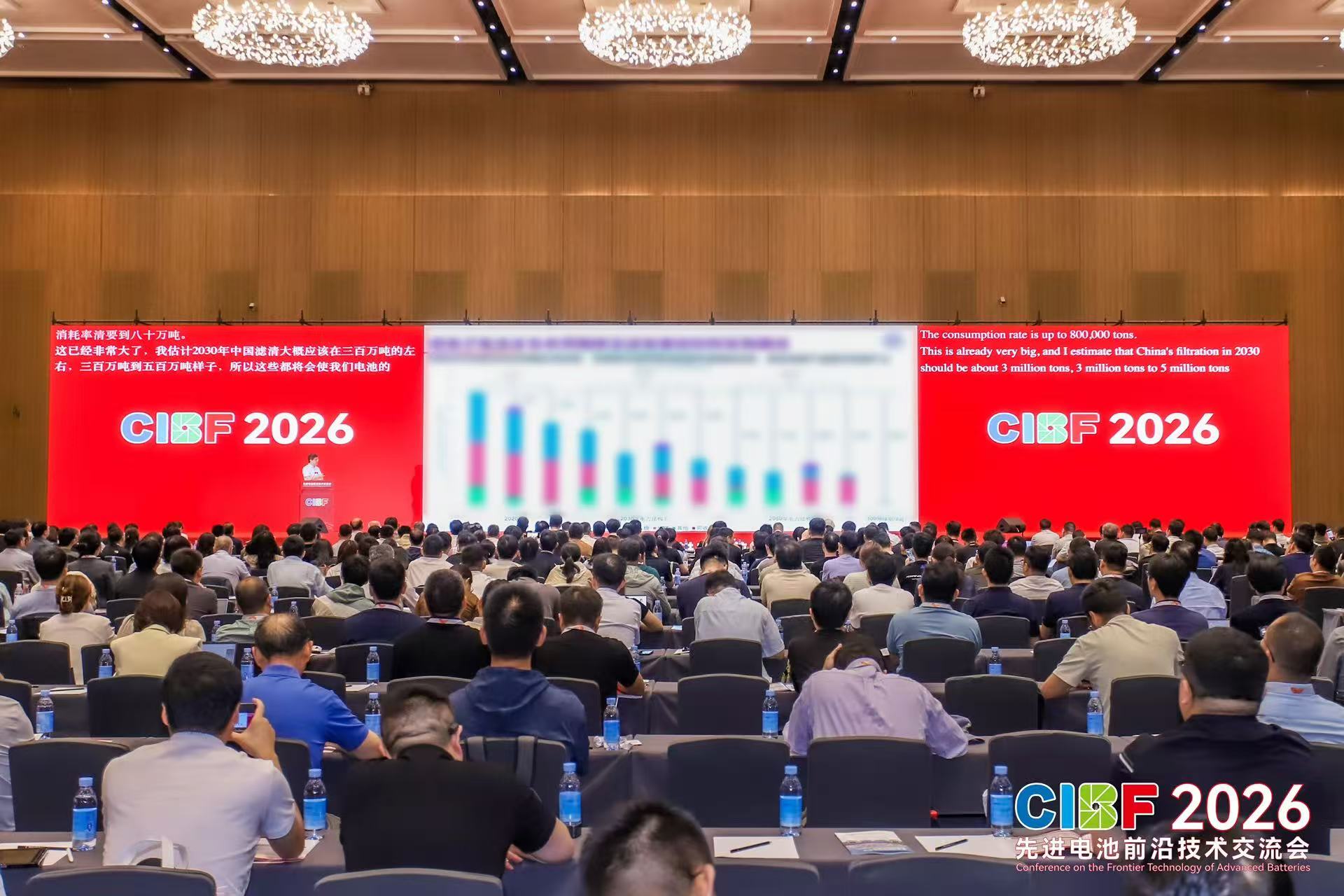
The 18th China International Battery Fair & Summit (CIBF2026) — the world’s largest battery industry event — kicked off at Shenzhen World Exhibition & Convention Center (Bao’an) from May 13 to 15, 2026. Boasting a record-breaking scale of 280,000 square meters of exhibition space, over 3,200 global exhibitors, and more than 350,000 professional visitors, the fair brought together cutting-edge innovations from across the entire lithium battery industrial chain. It served as both a review of the industry’s technological progress in the first year of the “14th Five-Year Plan” and a key platform for global energy transition and cross-border trade collaboration. Our team, with years of experience in the lithium battery sector, attended the event in person to explore industry hotspots, technological trends, and overseas opportunities, sharing first-hand insights with global clients.
I. Cutting-Edge Technologies Take Center Stage: Solid-State and Sodium-Ion Batteries Near Mass Production
This year’s exhibition highlighted two game-changing technologies — solid-state and sodium-ion batteries — which have moved beyond the concept stage and are now on the verge of mass production. These innovations have become the focal point of the show, redefining the industry’s technological competition landscape.
1. Solid-State/Coagulated-State Batteries: Advancing High Energy Density
CATL showcased its Kirin Coagulated-State Battery, featuring a cell energy density of 350Wh/kg — enough to power a passenger car for 1,500km. Mass production is scheduled for the second half of 2026. The company also updated attendees on its all-solid-state battery R&D, noting that energy density has exceeded 500Wh/kg with small-batch trial production underway. Other key players like BAK Battery and Gotion High-Tech also displayed solid-liquid hybrid and all-solid-state battery products. With energy density reaching 300Wh/kg, these solid-liquid hybrid batteries are ideal for electric aviation, high-end energy storage, and similar applications — a clear sign that the industrialization of solid-state technology is accelerating.
2. Sodium-Ion Batteries: Cost Advantages Drive Energy Storage Growth
As a cost-effective alternative to lithium-based batteries amid high lithium prices, sodium-ion batteries emerged as a star attraction at the fair. CATL officially announced that its NaNew Battery will enter mass production in the fourth quarter of 2026, having secured the world’s largest sodium-ion energy storage order (60GWh) — with a cost 30% lower than lithium iron phosphate batteries. Companies like Jianai Energy and Penghui Energy also launched mass-produced sodium-ion cells, suitable for household energy storage, low-speed vehicles, and start-stop power supplies. Global sodium-ion battery shipments are projected to surpass 30GWh in 2026, marking the official launch of the technology’s large-scale commercialization.
II. Mainstream Lithium Battery Products Evolve: Energy Storage and Small Power Cells Fuel Overseas Demand
While solid-state and sodium-ion technologies make breakthroughs, mainstream products — including lithium iron phosphate energy storage cells, cylindrical small power cells, and ultra-fast charging power batteries — continue to evolve. These products focus on high safety, long cycle life, and cost efficiency, perfectly aligning with the needs of global niche markets such as energy storage, POS machines, and power tools.
1. Large-Capacity Energy Storage Cells: Key to Overseas Order Growth
Surging global demand for energy storage has made large-capacity lithium iron phosphate energy storage cells a top priority for exhibitors. CATL and Haibosi Chuang launched 280Ah/300Ah energy storage-specific cells with a cycle life of over 6,000 times. Ganfeng Lithium Industry displayed 588Ah ultra-large-capacity cells and 6.26MWh liquid-cooled energy storage systems — with 25% higher capacity than the industry average. These products are well-suited for large industrial/commercial energy storage and household energy storage, attracting significant attention from buyers in the Middle East, Europe, and Latin America.
2. Cylindrical/Small Power Cells: Essential for POS Machines and Portable Devices
For portable device markets — including power tools, two-wheelers, and POS machines — 18650/21700 cylindrical cells have undergone quality upgrades. Companies like Zhaoke Energy and BAK Battery introduced high-rate, long-cycle cylindrical cells: capacity-type cells for energy storage and low-speed equipment, and rate-type cells to meet the instant discharge needs of power tools. Soft-pack and square batteries designed specifically for POS machines emphasize ultra-thinness, high safety, and over 5,000 cycles, with 3.7V/3.8V mainstream specifications compatible with global POS models. These batteries have become core best-sellers for overseas cross-border trade.
3. Ultra-Fast Charging Power Batteries: Expanding to Specialized Applications
BYD’s second-generation Blade Battery features 8C ultra-fast charging technology, capable of charging from 10% to 70% in just 5 minutes at room temperature — and maintaining stable charging even in -30℃ extreme cold. CATL’s third-generation Shenxing ultra-fast charging battery can reach 98% charge in 6 minutes and 27 seconds, with significantly improved low-temperature performance. This ultra-fast charging technology is increasingly being adopted in energy storage inverters and portable power supplies, offering efficient energy solutions for outdoor operations and emergency power needs.
III. Industry Insights: Four Key Overseas Opportunities and Trends
As a team focused on lithium battery cross-border trade, we prioritized connecting with cell suppliers, energy storage system integrators, and overseas buyers at the exhibition. Based on these interactions, we’ve identified four core opportunities and trends shaping the industry:
1. Strong Niche Market Demand: POS Machine Batteries and Household Energy Storage Orders Surge
Buyers from the Middle East, Africa, and Southeast Asia focused heavily on POS machine batteries and 48V/51.2V household energy storage packs, with key requirements including high safety, long service life, and cost efficiency. The 5kWh/10kWh household energy storage systems — often exported as complete sets with inverters — saw a year-on-year order increase of over 50%. POS machine-specific batteries, compatible with mainstream models and supporting customized BMS, have become a high-frequency purchase for small and medium-sized buyers.
2. Concentrated Supply Chain Resources: Better Bargaining Power and Quality Assurance
With over 3,200 exhibitors, the fair enabled one-stop access to the entire industrial chain — from cells and BMS to packs and certification services. On-site, we engaged with leading cell manufacturers like ATL and EVE to negotiate payment terms, sample customization, and price points. We also selected three suppliers with UN38.3 and COI certifications, enabling quick compliance with market access requirements in regions like the Middle East and Egypt. This not only reduces procurement costs but also mitigates supply chain risks.
3. Technological Upgrades and Cost Reduction: Sodium-Ion and Cost-Effective Lithium Iron Phosphate Gain Traction
Against the backdrop of high lithium prices, sodium-ion batteries and fifth-generation lithium iron phosphate batteries have become key cost-saving solutions. CATL’s fifth-generation lithium iron phosphate batteries are already in mass production, with a 20% cost reduction compared to the previous generation. Once sodium-ion cells enter large-scale mass production, they are expected to further lower the procurement cost of energy storage and small power batteries — offering a “cost-effective + high-profit” product combination for cross-border trade.
4. From Price Wars to Value Wars: Professionalism and Service Become Core Competitiveness
Wang Zeshen, Secretary-General of China Industrial Association of Power Sources, emphasized in his opening speech that the industry must shift from “price competition” to “value competition.” For industry players, relying solely on low prices is unsustainable; building customer trust requires professional product knowledge, stable supply chains, customized services, and international certifications. Many overseas buyers at the fair explicitly stated they prefer partners with exhibition endorsements, technical support, and after-sales guarantees.
IV. Conclusion: Seize Technology and Market Dividends to Drive Global Green Energy Transition
CIBF2026 is more than a technology showcase — it’s a bridge for global lithium battery industry cooperation. Breakthroughs in solid-state and sodium-ion batteries have opened up long-term growth opportunities, while the boom in niche markets like energy storage and POS machines offers clear overseas prospects for industry players.
Moving forward, leyoch will focus on three core product lines: high-safety lithium iron phosphate energy storage cells, cylindrical small power cells, and household energy storage systems. We will deepen partnerships with high-quality supply chains, strictly control product quality, and provide customized BMS solutions and international certification support. Our goal is to help global clients capitalize on energy transition dividends and work together to build a greener, low-carbon future.
About Us
leyoch specializes in cross-border lithium battery trade, with deep expertise in barcode scanner batteries, laptop batteries, sweeper batteries, power tool batteries, and energy storage inverter supporting batteries. Leveraging a stable supply chain and professional services, we deliver cost-effective lithium battery solutions to clients worldwide.