


Why More Companies Are Repairing Barcode Scanners Instead of Replacing Them
Introduction
For many businesses, barcode scanners are essential tools in daily operations.
Warehouses, logistics companies, retailers, and manufacturing facilities rely on handheld scanners to maintain inventory accuracy and operational efficiency.
When a scanner starts showing problems, the traditional solution was often replacement.
However, this approach is changing.
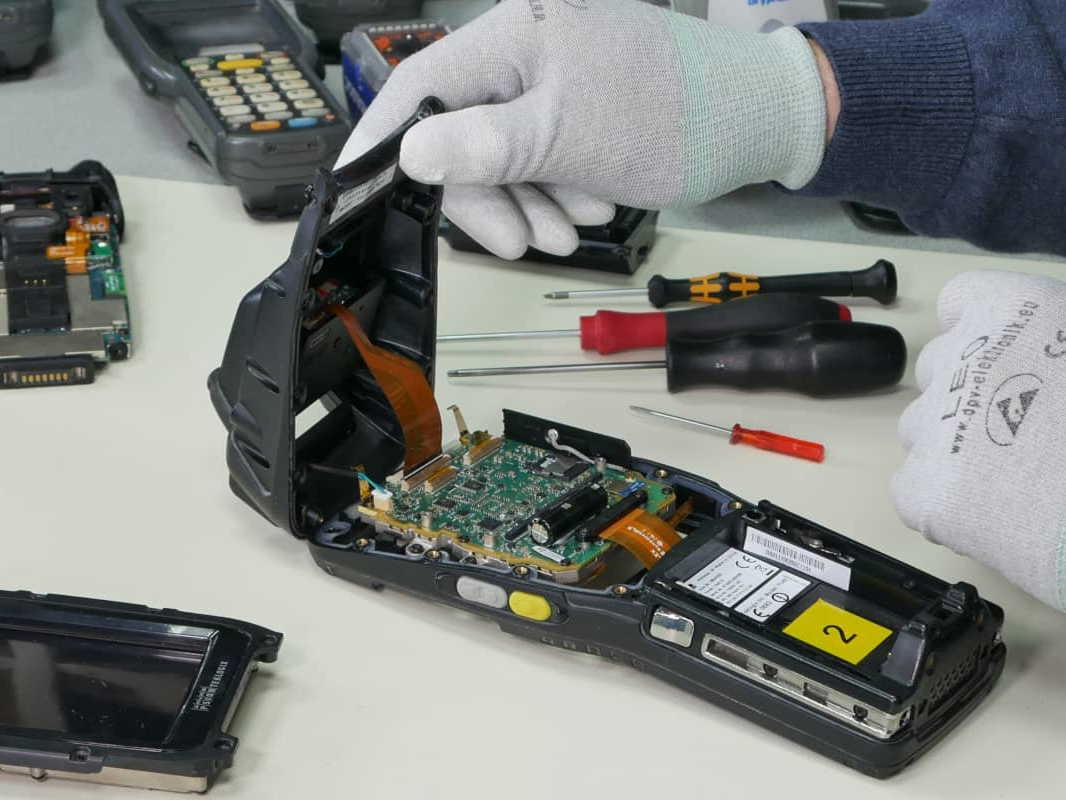
More companies are choosing to repair and extend the service life of existing barcode scanners instead of investing in completely new equipment.
The Cost of Replacing a Scanner Fleet
Replacing barcode scanners across an entire operation can be expensive.
The actual cost is not only the device itself.
Companies also need to consider:
- New equipment investment
- Employee training
- System configuration
- Accessories replacement
- Device migration time
For businesses operating hundreds or thousands of handheld devices, extending existing equipment life can create significant savings.
Batteries Are Often the First Maintenance Point
A barcode scanner may still be mechanically and electronically functional, while the battery has already lost much of its original performance.
This creates a common situation:
The device works, but it cannot support daily operations efficiently.
Typical battery-related issues include:
- Reduced working hours
- Frequent charging requirements
- Unexpected shutdowns
- Poor performance during intensive scanning tasks
In many cases, replacing the battery restores the scanner to normal operating conditions.
The Growth of the Refurbishment Market
The increasing focus on cost control and sustainability is driving growth in device refurbishment.
Many companies now prefer:
Repair → Test → Replace Wear Components → Return to Service
instead of:
Replace → Dispose → Purchase New Equipment
This approach is especially common for professional devices from brands such as Zebra, Honeywell, Datalogic, and other industrial handheld equipment manufacturers.
Why Battery Quality Matters More in Refurbishment
When repairing used devices, the replacement battery becomes one of the most important components.
A poor-quality battery can reduce the value of the entire refurbished device.
Professional repair companies usually evaluate:
Capacity Accuracy
The actual usable capacity should match the specification.
Voltage Stability
Stable voltage output helps maintain reliable device operation.
Safety Protection
Battery protection systems help prevent issues caused by:
- Overcharging
- Over-discharging
- Short circuits
- Excessive temperature
Batch Consistency
For repair businesses, one successful sample is not enough.
They need predictable performance across repeated orders.
A New Consideration: Total Equipment Lifecycle
More companies are moving from a replacement mindset to a lifecycle management mindset.
Instead of asking:
“How old is this scanner?”
They are asking:
“How can we maximize the value of this equipment?”
Battery replacement plays an important role in this strategy.
By maintaining batteries properly, companies can:
- Extend device usage time
- Reduce unnecessary equipment spending
- Improve return on investment
- Reduce electronic waste
What This Means for Battery Suppliers
The role of a battery supplier is also changing.
Customers are no longer only looking for a product.
They need a partner who understands:
- Device compatibility
- Application requirements
- Quality expectations
- Long-term supply needs
For this reason, professional battery suppliers need to provide more than specifications and pricing.
Technical support and consistent quality are becoming equally important.
Conclusion
The future of barcode scanner management is moving toward longer equipment utilization and smarter maintenance.
Replacing a battery can often extend the useful life of a scanner for years, making it a practical solution for businesses looking to reduce costs and improve efficiency.
For repair companies, distributors, and end users, choosing a reliable battery solution is an important part of successful device lifecycle management.