

How to Check a Replacement Barcode Scanner Battery Before Bulk Ordering
Ordering a few samples is common when sourcing replacement batteries for barcode scanners.
The more important question is what to do with those samples.
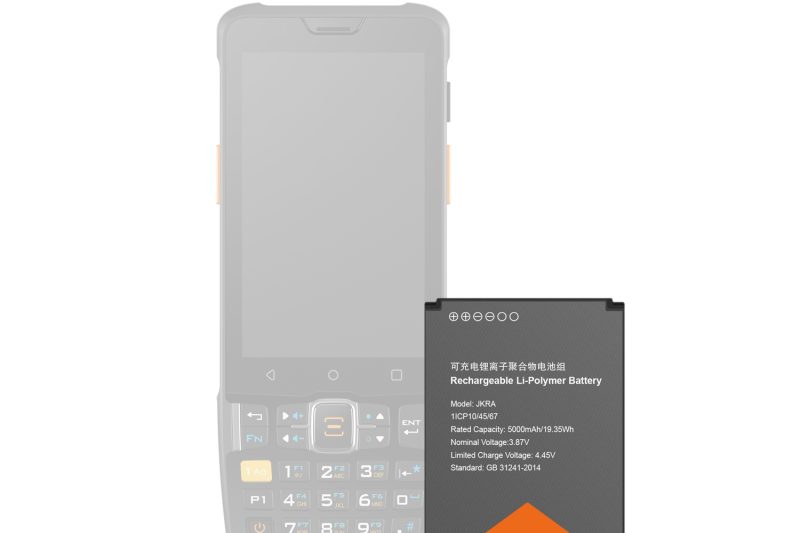
A battery may look identical to the original product and show the correct voltage and capacity on the label. That does not necessarily mean it will perform consistently in actual use.
For repair companies, distributors, and equipment service providers, a simple sample evaluation before a bulk order can prevent much bigger problems later.
Start With Physical Compatibility
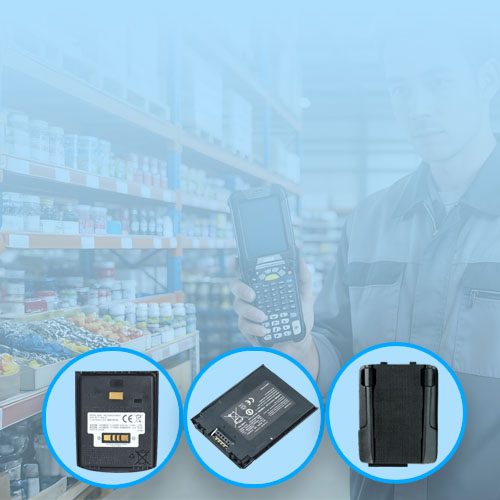
The first check is simple: make sure the battery fits the device correctly.
Check:
- Battery dimensions
- Connector position
- Connector type
- Contact points
- Housing structure
- Installation position
The battery should sit securely inside the scanner without excessive movement or pressure.
Do not force a battery into a device simply because the model number appears to match.
For replacement batteries, mechanical compatibility is just as important as electrical specifications.
Check the Voltage
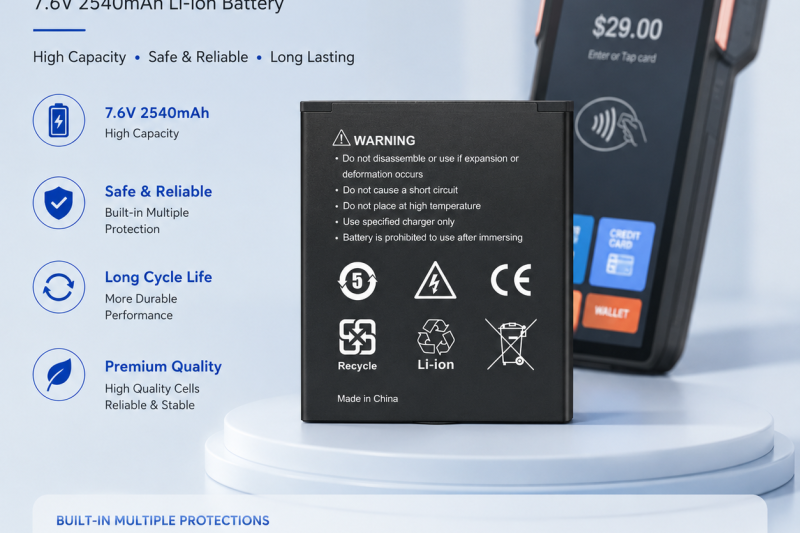
The replacement battery should match the electrical requirements of the original battery and the device.
Compare the specifications of the original and replacement batteries, including:
- Nominal voltage
- Charging voltage
- Capacity
- Battery configuration
A higher capacity number does not compensate for an incorrect voltage specification.
If there is any uncertainty, confirm the battery requirements with the manufacturer before testing.
Measure Actual Capacity
Capacity is one of the most important specifications for a replacement battery.
However, the number printed on the label should not be the only reference.
A proper capacity test can help determine whether the battery is delivering the expected performance under defined test conditions.
For B2B buyers, this is particularly useful because it creates an objective reference when comparing different suppliers.
Instead of asking:
“Which battery has the highest capacity?”
a better question is:
“Which supplier can consistently deliver the specified capacity?”
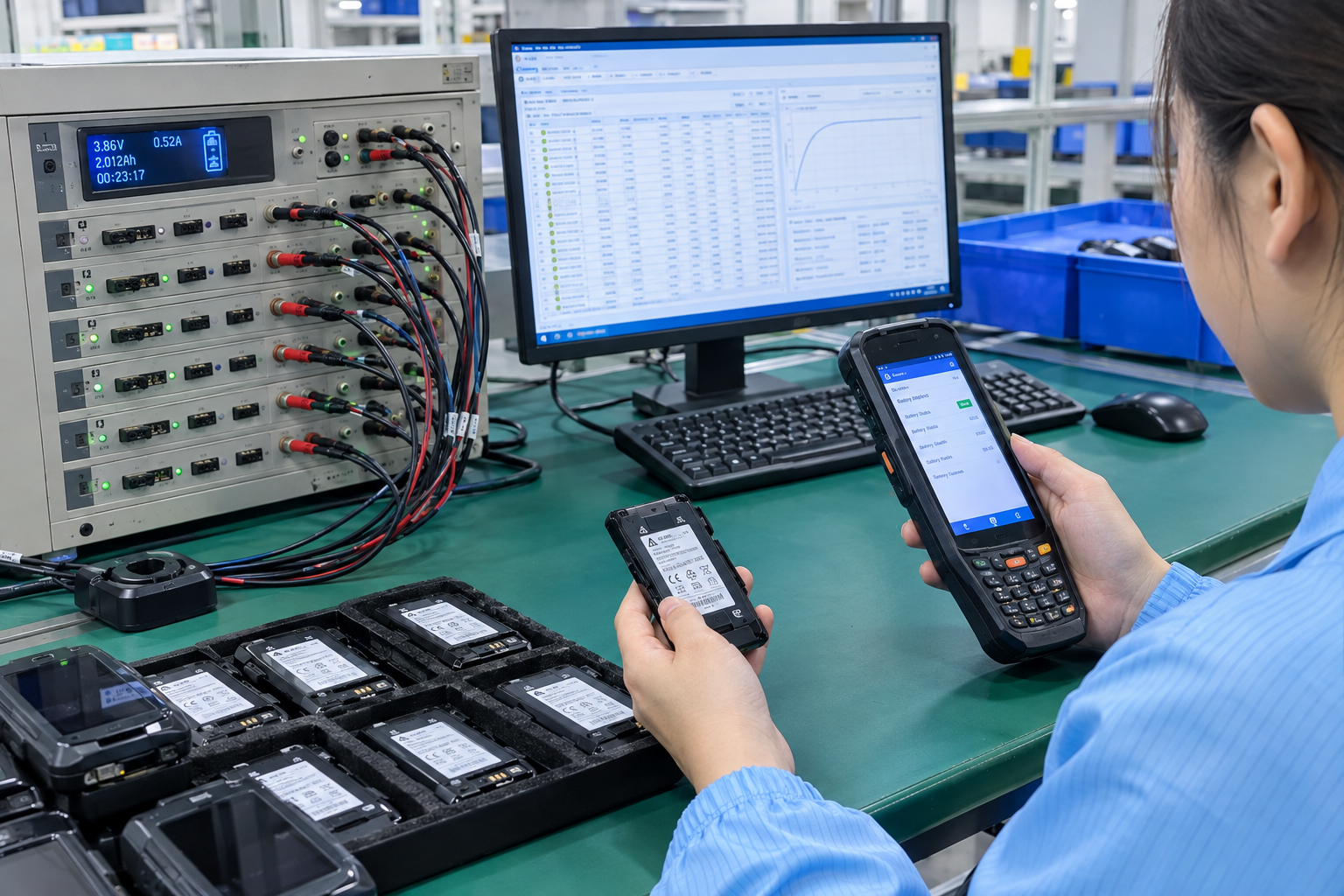
Test the Battery Inside the Actual Device
Laboratory testing provides useful data, but real-world device testing is equally important.
Install the sample battery in the actual barcode scanner and observe:
- Startup behavior
- Battery percentage
- Scanning performance
- Operating time
- Charging behavior
- Device temperature
A battery can pass a basic electrical test but still behave differently when installed in a specific device.
Real-device testing helps confirm practical compatibility.
Test More Than One Sample
Testing a single battery can tell you whether that individual unit works.
It tells you much less about production consistency.
If possible, test several samples from the same production batch.
Look for differences in:
- Initial voltage
- Capacity
- Charging time
- Operating time
- Physical assembly
The smaller the variation, the easier it is for a distributor or repair company to maintain consistent service quality.
Check Charging Performance
Charging behavior should also be included in the evaluation.
Observe whether the battery:
- Charges normally
- Reaches the expected charging level
- Becomes unusually hot
- Stops charging correctly
- Shows abnormal battery percentage changes
The charging test should be performed using the appropriate device, charger, or charging cradle.
Avoid making conclusions from a single short charging session.
Look at the Battery Construction
A professional sample evaluation should not stop at performance.
If possible, review the construction of the battery pack.
Important details may include:
- Cell arrangement
- Protection circuit
- Insulation
- Connector quality
- Welding quality
- Housing and wrapping
These details can provide useful information about how the battery was manufactured.
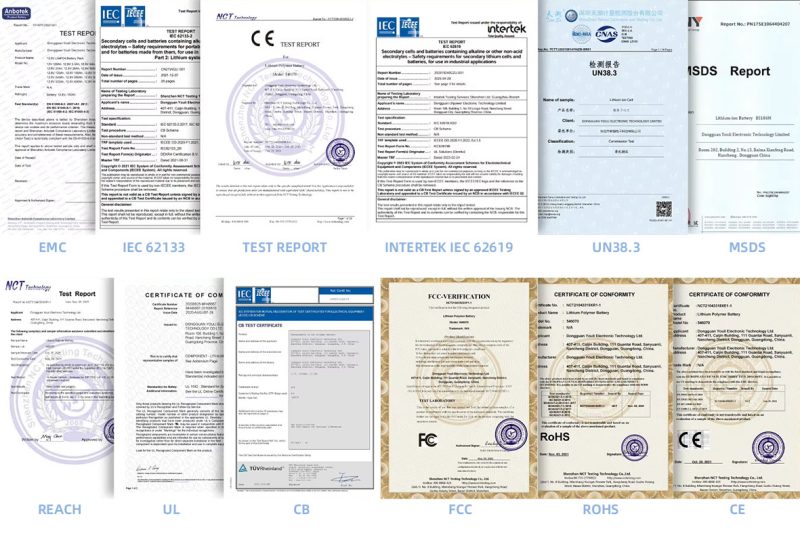
Ask for Test and Compliance Documents
For international B2B purchasing, documentation is another important part of supplier evaluation.
Depending on the product and destination market, buyers may need documents such as:
- UN38.3
- MSDS/SDS
- CE-related documentation
- Product specifications
- Test reports
The exact documentation requirements depend on the battery design, transportation method, and destination market.
A professional supplier should be able to explain which documents are available for the specific battery.
Evaluate the Supplier, Not Just the Sample
A successful sample test is a good starting point.
It should not be the only factor in a supplier decision.
Before placing a larger order, consider:
- Can the supplier reproduce the same specifications?
- Is production capacity sufficient?
- How is quality controlled?
- Can the supplier support repeat orders?
- How quickly can problems be addressed?
- Can the battery be customized if the device changes?
For distributors and repair companies, long-term consistency is usually more valuable than one excellent sample.
Create a Simple Pre-Order Checklist
A practical evaluation can be organized into five areas:
1. Compatibility
Does the battery physically and electrically match the device?
2. Performance
Does actual capacity and runtime meet expectations?
3. Charging
Does the battery charge normally without abnormal behavior?
4. Construction
Are the internal and external assembly details professionally finished?
5. Supplier Capability
Can the manufacturer maintain the same quality for future batches?
This simple framework can make supplier comparisons much more objective.
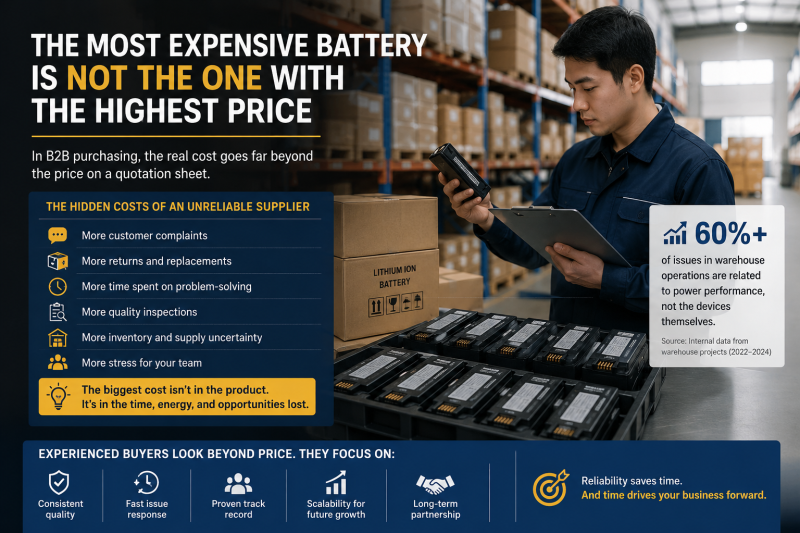
Don’t Judge a Battery by Price Alone
Price is important in the replacement battery business, especially for large-volume orders.
But the cheapest sample is not necessarily the lowest-cost solution.
A battery that creates frequent returns, warranty claims, or customer complaints can become more expensive over time.
The better approach is to compare total supply value:
Product quality + consistency + documentation + technical support + supply stability
rather than unit price alone.
Conclusion
A sample order is more than a way to check whether a battery works.
It is an opportunity to evaluate the product, the manufacturing quality, and the supplier behind it.
For barcode scanner repair companies, distributors, and service providers, a structured sample test can reduce purchasing risk and provide greater confidence before moving to a bulk order.
At Leyoch, we support customers with replacement battery solutions for barcode scanners, PDA devices, POS terminals, and other professional handheld equipment.
We welcome sample testing before larger orders and can discuss specifications, compatibility, testing requirements, and long-term supply needs.
Learn more about our battery solutions at https://leyoch.com.