

The Most Expensive Battery Is Not the One With the Highest Price
The Most Expensive Battery Is Not the One With the Highest Price
When evaluating battery suppliers, most buyers naturally focus on one thing first: price.
It’s understandable.
If two batteries appear to have the same specifications, the same capacity, and the same compatibility, choosing the lower-priced option seems like a smart business decision.
But after years of working with distributors, importers, warehouse solution providers, and industrial device manufacturers, I’ve learned an important lesson:
The most expensive battery is often not the one with the highest purchase price.
It’s the one that creates hidden costs after delivery.
A Real-World Example
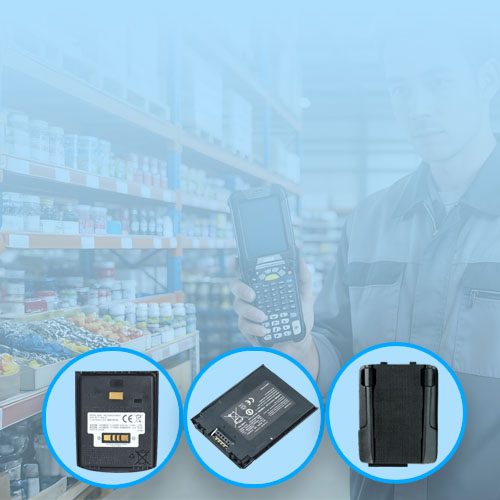
Several years ago, one of our customers was sourcing replacement batteries for a fleet of industrial handheld devices used in warehouse operations.
After comparing multiple suppliers, they narrowed their options down to two companies.
On paper, the products looked nearly identical.
The specifications matched.
The capacity ratings were similar.
The certifications appeared acceptable.
The only significant difference was price.
One supplier offered a quotation approximately 15% lower than the others.
The decision seemed straightforward.
Why pay more for what appeared to be the same product?
The customer selected the lower-priced supplier.
Initially, everything seemed fine.
The batteries arrived on time, passed incoming inspection, and were deployed into daily operations.
However, within three months, small issues began to emerge.
Not catastrophic failures.
Not safety incidents.
Just a growing number of operational problems.
Some batteries delivered shorter runtime than expected.
A few units experienced faster capacity degradation.
Several devices required battery replacement much earlier than planned.
Operators reported inconsistent performance during long shifts.
Individually, none of these issues seemed serious.
Collectively, they became a significant burden.
The Hidden Costs Nobody Calculates
Every battery-related issue triggered a chain reaction throughout the organization.
The operations team had to investigate complaints.
Customer service representatives spent time responding to inquiries.
Warehouse staff handled replacement inventory.
Purchasing teams communicated with suppliers.
Technical personnel analyzed performance data.
Management reviewed reports and approved corrective actions.
The customer eventually conducted an internal review to determine the true financial impact.
What they discovered was eye-opening.
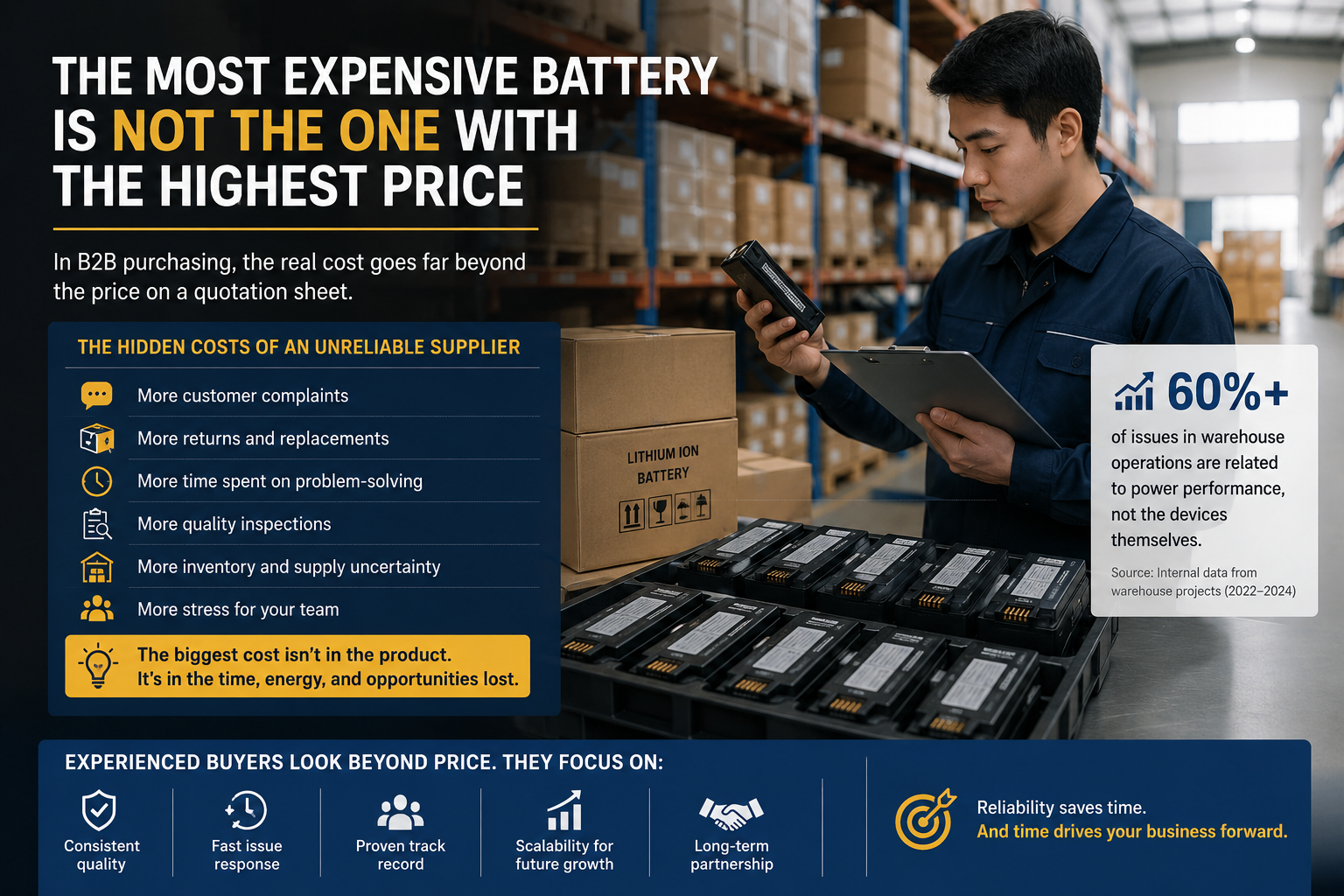
The savings achieved through the lower purchase price had already been consumed by:
Additional labor costs
Product replacement expenses
Increased customer support workload
Inventory management complications
Operational disruptions
Administrative overhead
The batteries themselves were not the biggest expense.
Managing the consequences was.
I still remember what the customer told me afterward:
“The biggest cost wasn’t replacing the batteries. It was distracting our team from growing the business.”
That statement perfectly summarizes a challenge many companies overlook.
The Difference Between Product Cost and Ownership Cost
In procurement, buyers often compare product costs.
Far fewer evaluate total ownership costs.
The purchase price is visible.
The operational impact is not.
A battery that costs 10% less may appear attractive during supplier selection.
However, if that battery generates quality issues, inconsistent performance, or premature failures, the long-term cost can be significantly higher.
This principle applies not only to batteries but to virtually every industrial product.
The true cost of a component includes:
Product reliability
Service life
Quality consistency
Supplier responsiveness
Technical support
Supply chain stability
When these factors are ignored, hidden costs begin to accumulate.
Why Reliability Matters More Than Ever
For businesses operating warehouses, logistics centers, retail networks, field service operations, or manufacturing facilities, battery performance directly affects productivity.
A battery failure doesn’t simply mean replacing a component.
It can mean:
Interrupted workflows
Reduced employee productivity
Delayed order fulfillment
Increased maintenance requirements
Customer dissatisfaction
In environments where handheld terminals, barcode scanners, mobile computers, and PDA devices operate continuously throughout the day, reliability becomes a critical business factor.
That’s why experienced procurement professionals rarely evaluate suppliers based solely on price.
Instead, they focus on risk reduction.
Questions Smart Buyers Ask
The most successful purchasing managers I’ve worked with tend to ask deeper questions before making a decision.
For example:
How consistent is quality between production batches?
A supplier may deliver excellent samples but struggle to maintain consistency during mass production.
What testing procedures are performed before shipment?
Reliable manufacturers invest in aging tests, cycle testing, capacity verification, and safety inspections.
How quickly are quality issues resolved?
Problems can occur in any industry.
The difference lies in how suppliers respond.
Can the supplier support future growth?
A supplier that meets today’s demand may not be capable of supporting tomorrow’s expansion.
What is the supplier’s track record?
Long-term customer relationships often reveal more than marketing materials ever can.
These questions help buyers evaluate long-term value rather than short-term savings.
The Real Competitive Advantage
In today’s competitive market, businesses are constantly searching for ways to reduce costs.
However, the most successful companies understand that reducing risk is often more valuable than reducing price.
Reliable suppliers help organizations:
Minimize operational disruptions
Improve customer satisfaction
Reduce management workload
Maintain predictable inventory planning
Support sustainable growth
In many cases, paying slightly more upfront results in significantly lower costs over the life of the product.
That’s not an expense.
It’s an investment in stability.
Final Thoughts
Price will always be an important factor in procurement decisions.
It should be.
Every business must manage costs responsibly.
But the lowest quotation does not always represent the lowest total cost.
When evaluating suppliers, it’s worth looking beyond the numbers on the quotation sheet and considering the broader impact on your operations.
Because in the long run, the most expensive battery is rarely the one with the highest price.
It’s the one that consumes your team’s time, creates unnecessary problems, and distracts your business from growth.
What Do You Think?
When evaluating a new supplier, what factors matter most to your organization besides price?
Quality consistency?
Technical support?
Delivery reliability?
Industry experience?
I’d love to hear your perspective.
#Procurement #SupplyChainManagement #Purchasing #BatteryIndustry #WarehouseOperations #IndustrialDevices #SupplierManagement #Logistics #ImportExport #B2BManufacturing #BusinessGrowth #OperationsManagement #LithiumBattery #OEMManufacturer #GlobalTrade